Surfaces Designed for Year-Round Exposure
Commercial Protective Coatings in Lafayette for structures and surfaces facing moisture, corrosion, weathering, or heavy wear in active commercial environments
Louisiana's combination of persistent humidity, seasonal flooding, and high UV exposure accelerates surface deterioration on commercial structures in ways that standard paint alone cannot address. Costello Protective Coatings applies protective coating systems specifically selected for surfaces that require added resistance beyond what conventional finishes provide—including rubber, acrylic, and galvanized-metal coating systems applied based on what the substrate and exposure conditions actually call for. Commercial properties in Lafayette that operate facilities with metal structures, concrete surfaces, or exterior assemblies exposed to moisture and weather are the primary candidates for this type of work.
Protective coating projects begin with surface preparation, which typically includes cleaning, removal of corrosion or loose material, and priming where required to establish proper adhesion. Coating selection follows from the evaluation of what the surface is made of, what it's exposed to, and what performance the installation needs to maintain over time. Rubber coatings, for instance, are applied to surfaces where flexibility under thermal cycling is a requirement—metal structures expand and contract with temperature swings, and a rigid coating on those surfaces cracks at stress points. Acrylic systems and galvanized-metal coatings address different failure patterns and are matched accordingly, not applied interchangeably.
Request an on-site evaluation and estimate to identify the appropriate coating system for your commercial surfaces. Costello Protective Coatings is a dedicated protective coatings business proudly serving Louisiana, Arkansas, Iowa, Mississippi, Tennessee, Missouri, and Texas.
The Difference Between General Paint and Protective Coating Systems
Protective coatings are engineered for surface conditions where standard architectural paint would degrade quickly—high moisture exposure, chemical contact, UV saturation, or abrasion from operational activity. The application process accounts for this: film thickness is controlled more precisely, surface profile requirements are stricter, and curing conditions are monitored because under-cured coatings fail adhesion tests even when they look complete. Costello Protective Coatings applies these systems with the process discipline that commercial exposure conditions require, drawing on more than 30 years of field experience across a range of commercial property types.
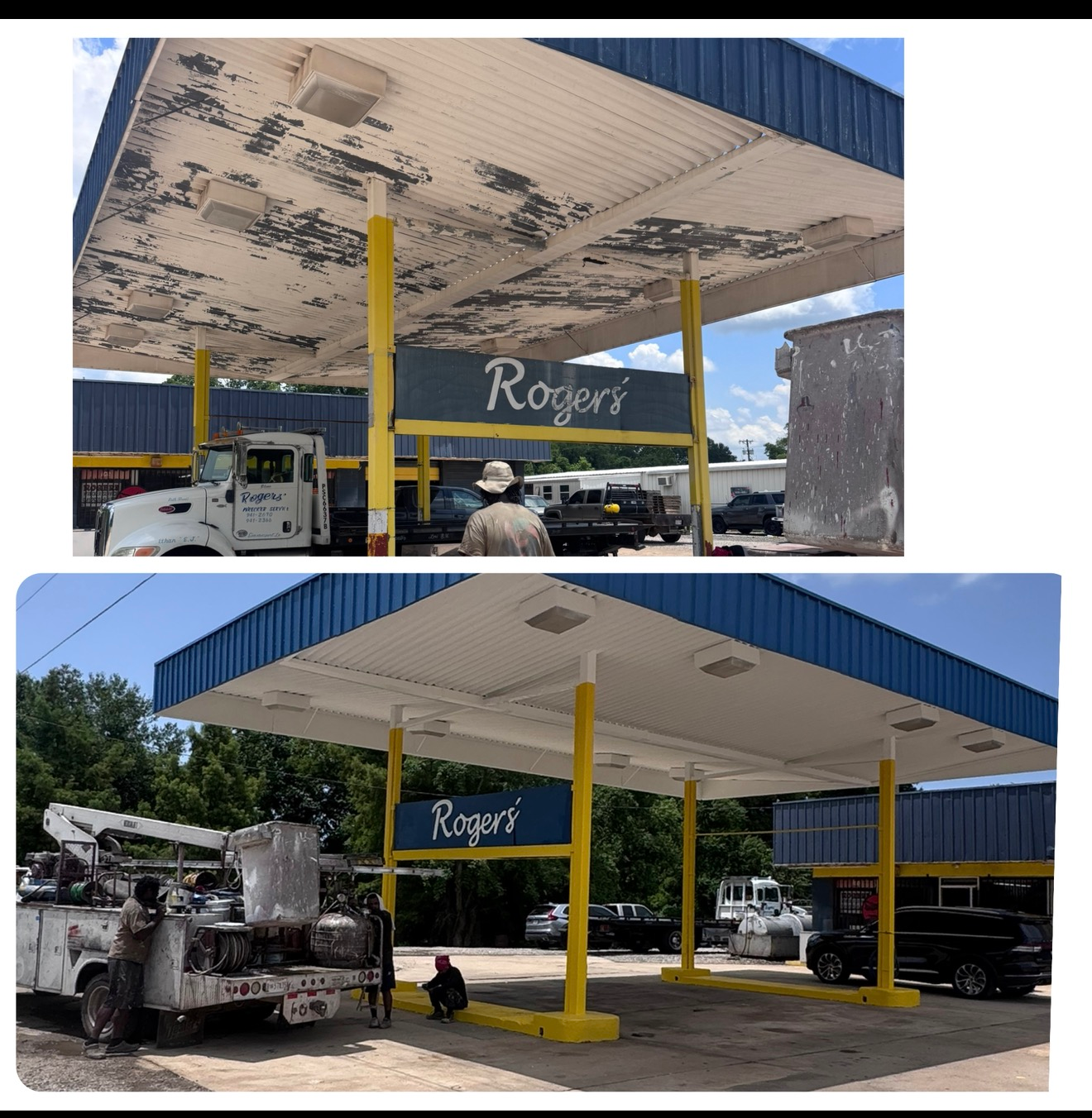
After a protective coating system is properly applied and cured, the visual and functional differences are specific and observable. Metal surfaces that previously showed rust bleed or surface oxidation present a clean, sealed appearance. Concrete and masonry surfaces lose the chalky, water-stained look that comes from unprotected exposure and instead show consistent coverage that sheds moisture rather than absorbing it. The surface change isn't cosmetic in isolation—it reflects a physical barrier that changes how the substrate interacts with water, UV radiation, and the mechanical contact that comes with commercial activity.
Project scope varies depending on the surface area involved, the substrate condition at the start of work, and how many coating layers the system requires. Some installations involve a single-coat application over a prepared surface; others require primer, intermediate, and topcoat layers to build the film thickness and adhesion needed for the exposure environment. Those decisions are made based on what the project actually calls for, not a default approach applied to every surface type.
Questions Before Starting Your Project
These questions address the practical aspects of selecting and applying commercial protective coatings, particularly for property owners evaluating options for surfaces with specific exposure or durability requirements.
What types of surfaces are appropriate for protective coating systems?
Metal structures, concrete, masonry, and certain roofing substrates are common candidates—surface material and condition are evaluated before a coating system is selected, because not all coatings are suited to every substrate.
How does the preparation process differ from standard painting prep?
Protective coating prep typically requires more aggressive surface cleaning, rust or corrosion removal, and precise surface profiling to achieve the adhesion levels that performance coatings require under ongoing exposure.
Why are rubber, acrylic, and galvanized-metal coatings used in different situations?
Each system is formulated for different performance requirements—flexibility, UV resistance, corrosion inhibition—and applying the wrong system to a surface, even with good prep, produces premature failure at the points the coating wasn't designed to handle.
When do commercial properties in Lafayette most often need protective coatings evaluated?
After storm seasons, when surface corrosion becomes visible, or when existing coatings begin showing cracking or adhesion loss are the most common triggers for a professional evaluation in this region.
What maintenance does a protective coating system require after application?
Periodic inspection for mechanical damage, edge lifting, or areas of standing water contact is the primary ongoing consideration—catching localized failures early prevents them from expanding into larger substrate issues.
Costello Protective Coatings brings decades of hands-on experience with commercial surface conditions across a range of industries and property types. Call (337) 567-6072 to schedule an evaluation of your facility's surfaces and receive a project-specific estimate.